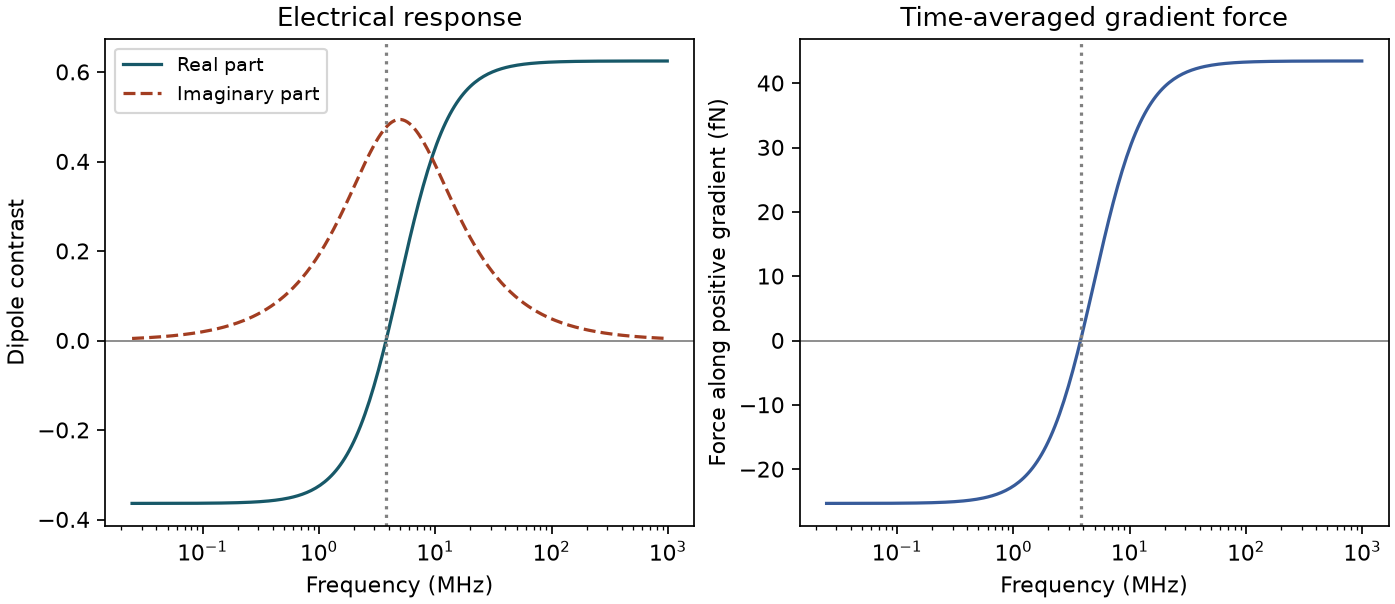
Why a leaky sphere can reverse its drift in an alternating field
Place a small lossy sphere in a weakly nonuniform alternating electric field. Change the particle conductivity and decide whether high- and low-frequency forces point toward the same region.
Open editable notebook · Download .ipynb · Chapter 8 · Polarization of a dielectric sphere
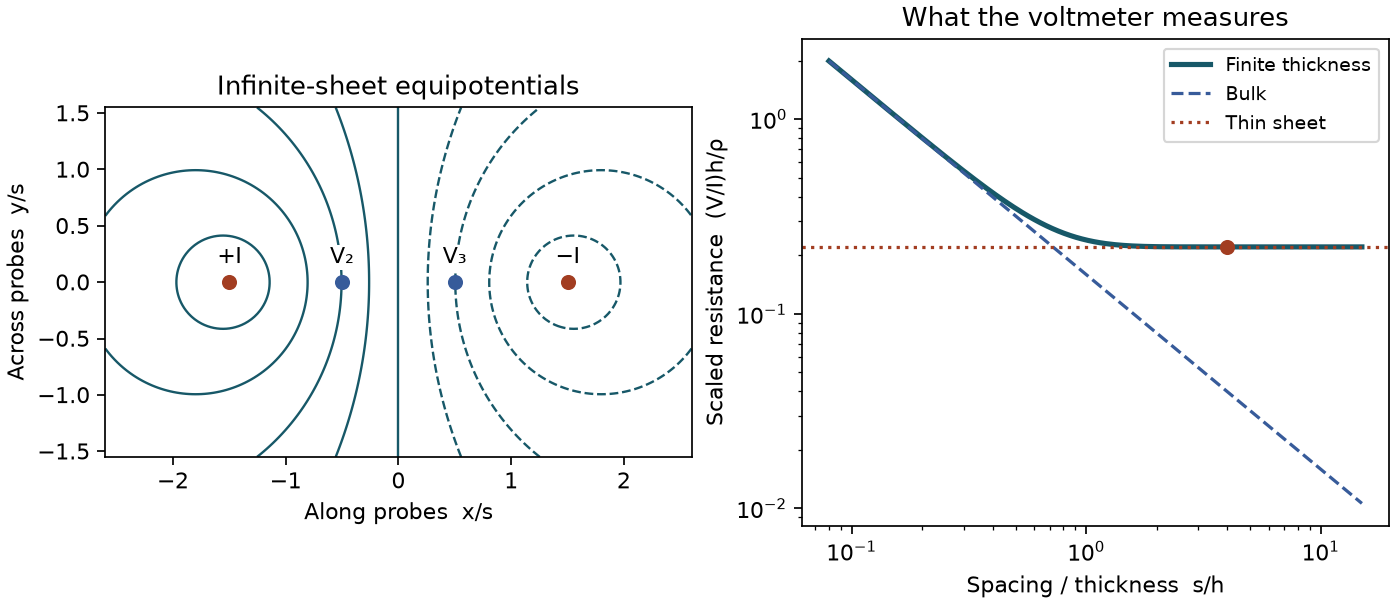
Four contacts on a conductor of finite thickness
A voltmeter scarcely draws any current, yet its reading depends on how the current from a separate pair of leads spreads inside the specimen. Derive the conversion from a four-terminal reading to resistivity. Decide from the geometry whether the result describes a bulk material or a conducting sheet.
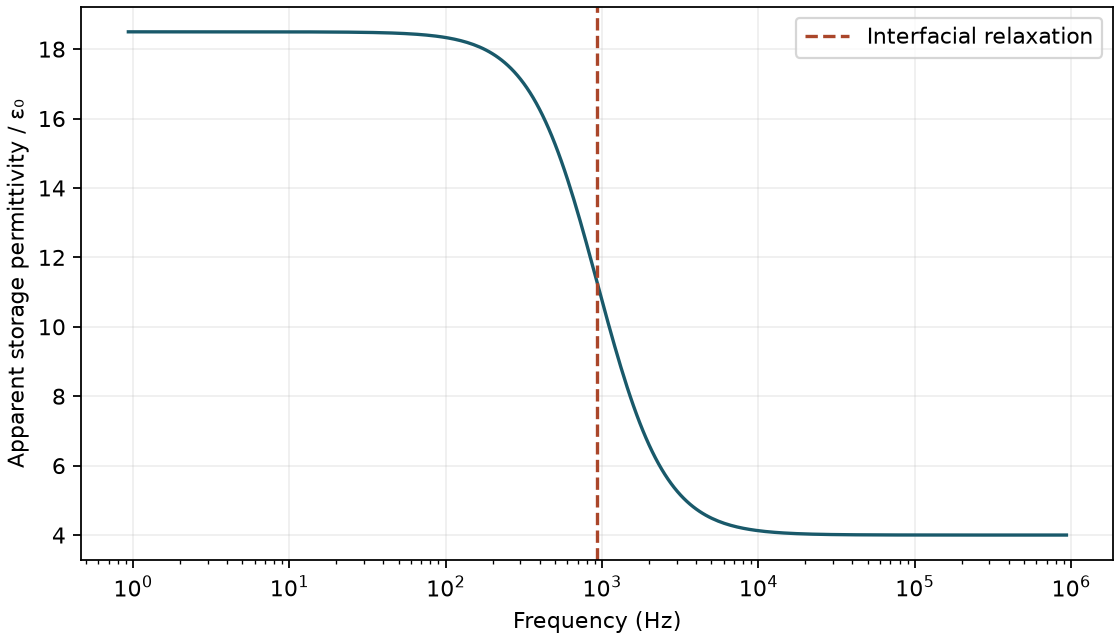
Can two ohmic layers imitate a relaxing dielectric?
Model a film and its contact layer in series. Derive the frequency scale of interfacial charge accumulation and decide which features of a measured spectrum can arise from geometry alone.
Open editable notebook · Download .ipynb · Fields and the response of matter
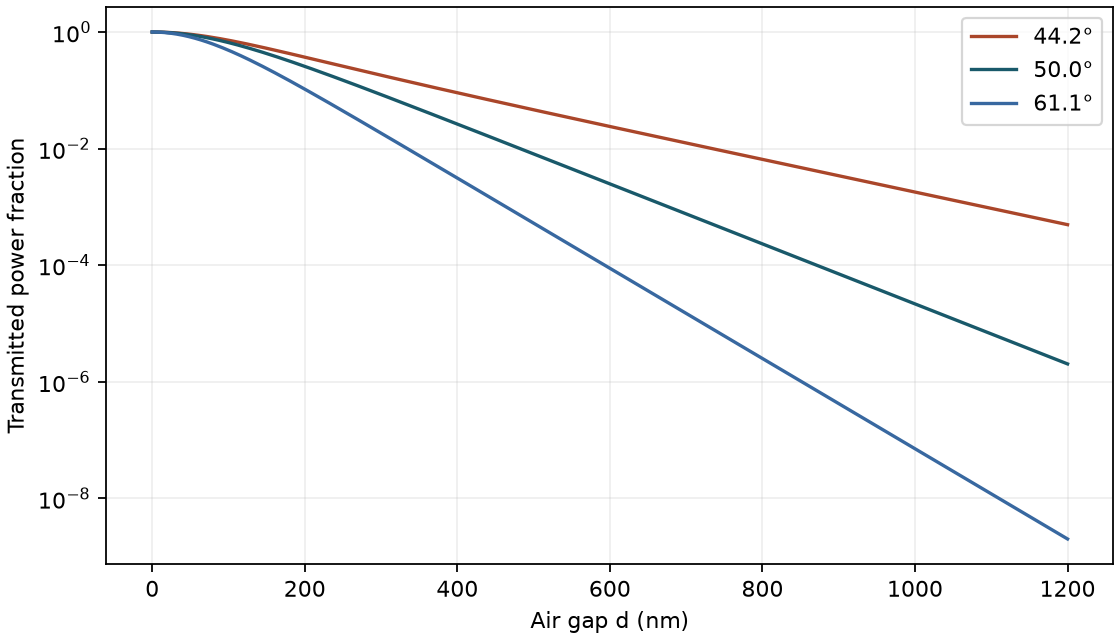
How can a field that decays in air transmit power to another prism?
Place a thin air gap between identical prisms. Derive the TE transmission from the two interface conditions and test when an exponential attenuation length predicts the actual throughput.
Open editable notebook · Download .ipynb · Waves, radiation and relativity
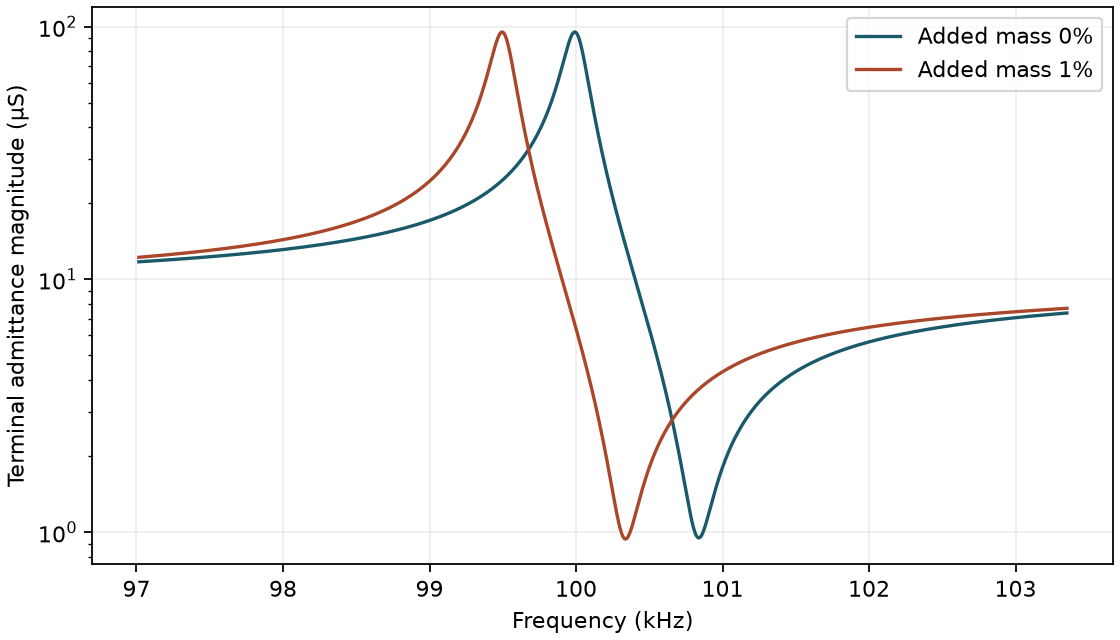
Weighing a small deposit with a piezoelectric resonator
Two nearby frequencies appear in the electrical response of one mechanical mode. Derive the series and parallel resonances, then use their different sensitivities to recognise added mass and stray capacitance.
Open editable notebook · Download .ipynb · Electromechanics, optics and measurement
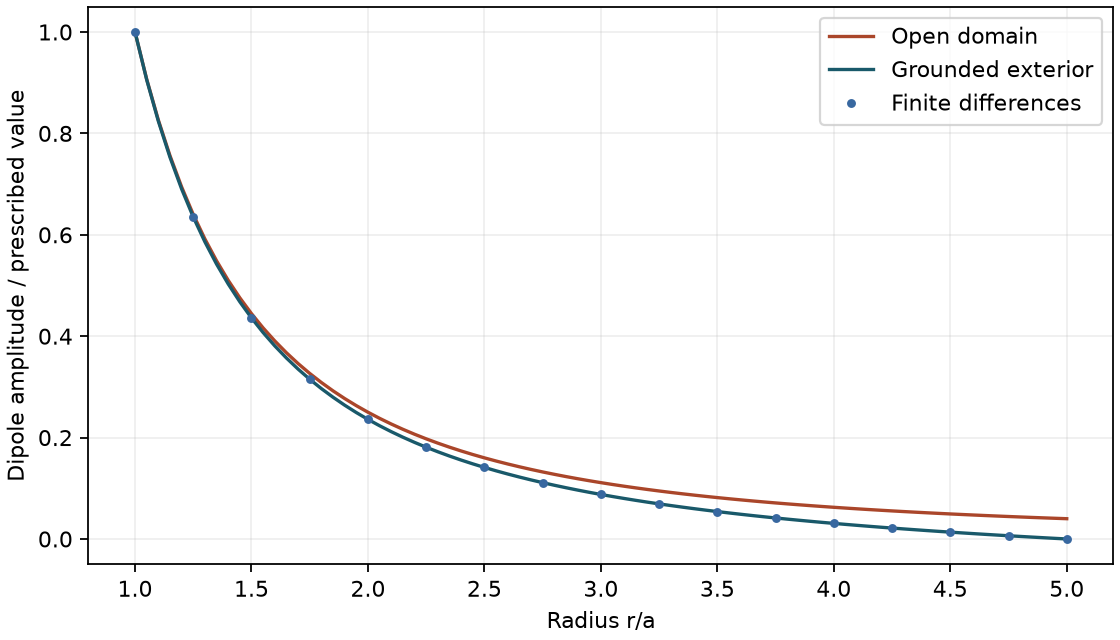
Where should a numerical electrostatic domain end?
A finite mesh needs an outer boundary even when the physical field extends to infinity. Solve the artificial-boundary error exactly for a dipole and test whether enlarging the numerical domain or matching the exterior field is more effective.
Open editable notebook · Download .ipynb · Numerical field laboratory
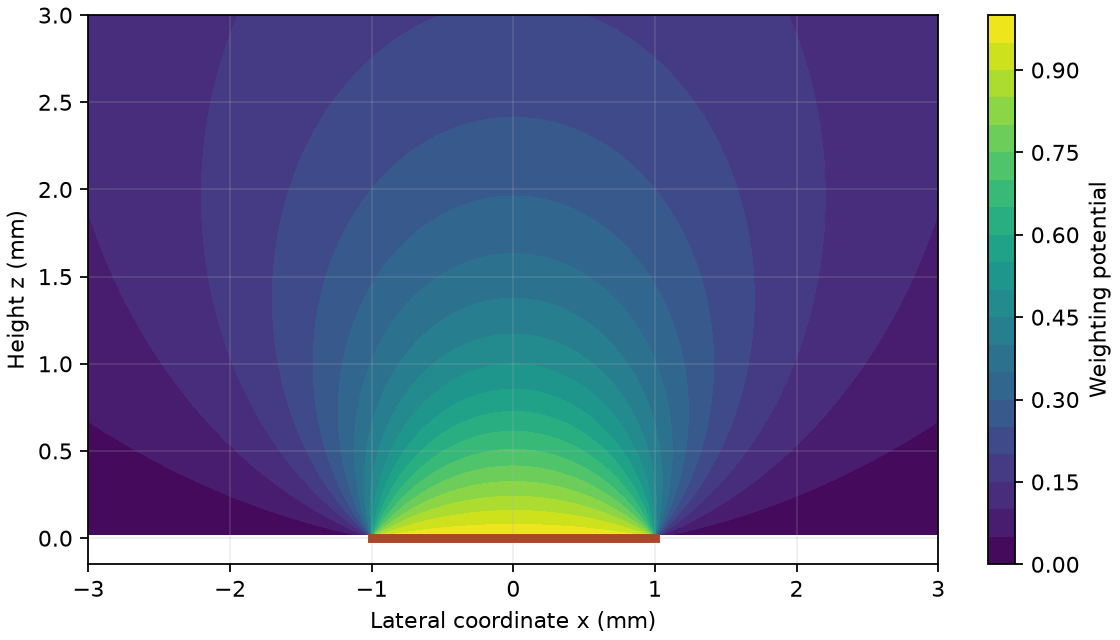
Which electrode sees a charge moving above a detector?
A point charge moves without touching the electrodes. Derive the induced charge on one strip from a second, source-free boundary problem. Use the two-dimensional map to distinguish motion across the detector from motion away from it.
Open editable notebook · Download .ipynb · Electrostatic field theory and measurement
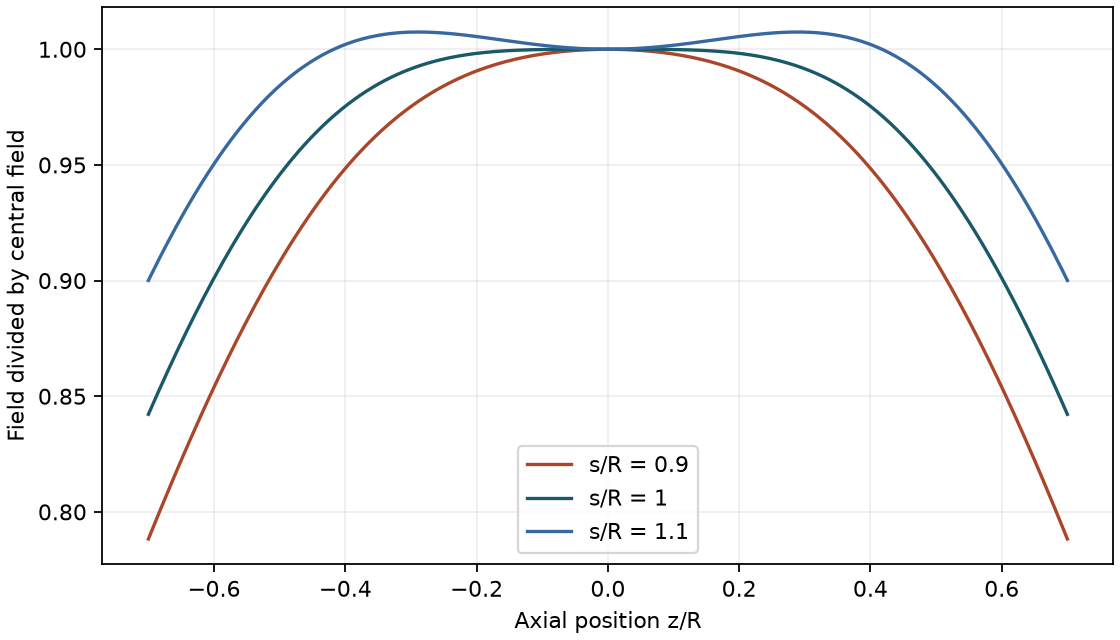
Why does a Helmholtz pair have a useful uniform region?
A magnetometer averages the field over a finite sample. Derive the coil spacing that suppresses curvature and predict how rapidly the remaining calibration error grows away from the midpoint.
Open editable notebook · Download .ipynb · Magnetism, induction and field dynamics
Fundamentals / Physics / Electrodynamics
Electrodynamics · Computational notebooks
Change an input, run the Python cells and compare the result with the derivation. You can also download each notebook for Jupyter.