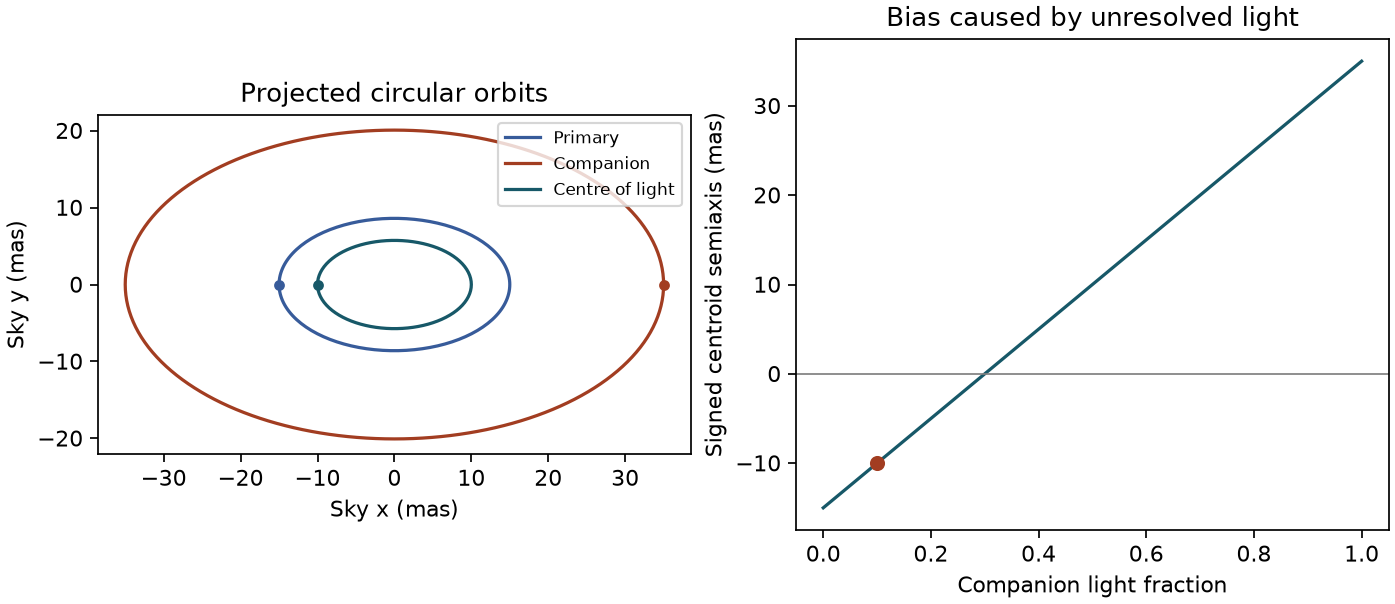
When the moving centre of light hides a binary orbit
Change the companion's mass and brightness independently. The detector sees the centre of light in a projected circular orbit; the centre of mass remains fixed. Decide in advance when the astrometric signal will vanish.
Open editable notebook · Download .ipynb · Chapter 7 · Two-body motion and binary masses
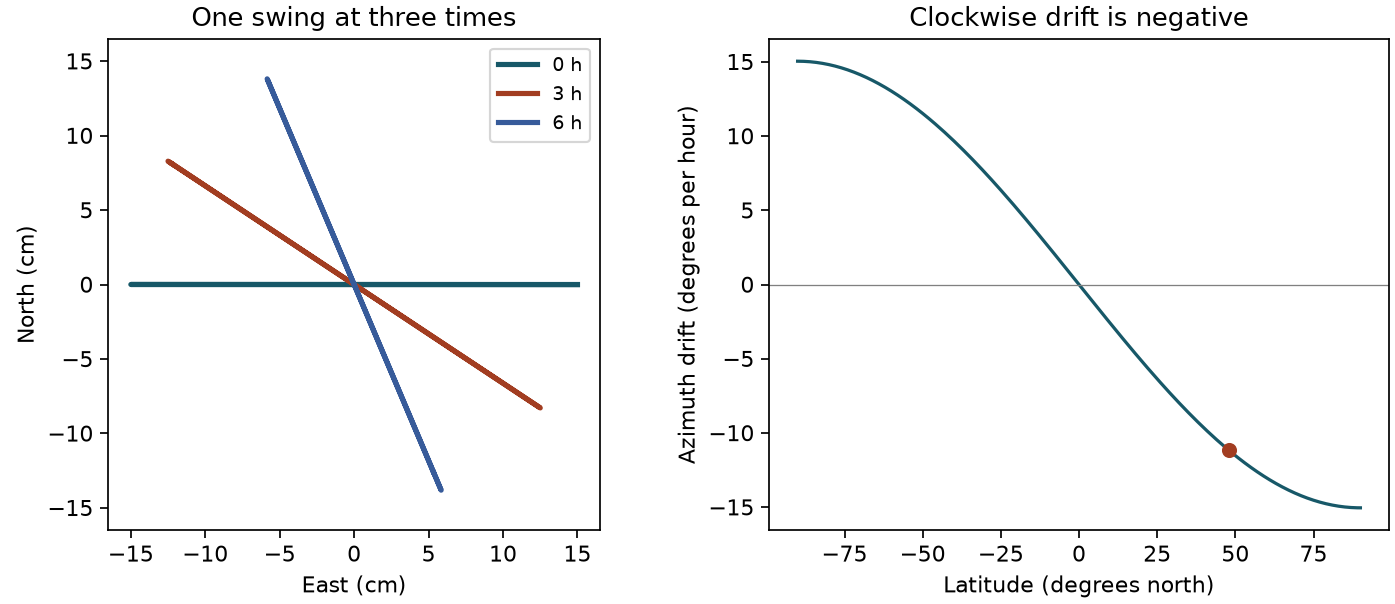
Reading Earth's rotation from a pendulum trace
A free pendulum supplies two clocks. The bob returns in seconds, while the axis traced on the floor takes hours to rotate. Derive both rates from the tension and gravity, then work out what a camera actually measures and how a slightly imperfect suspension can imitate part of the signal.
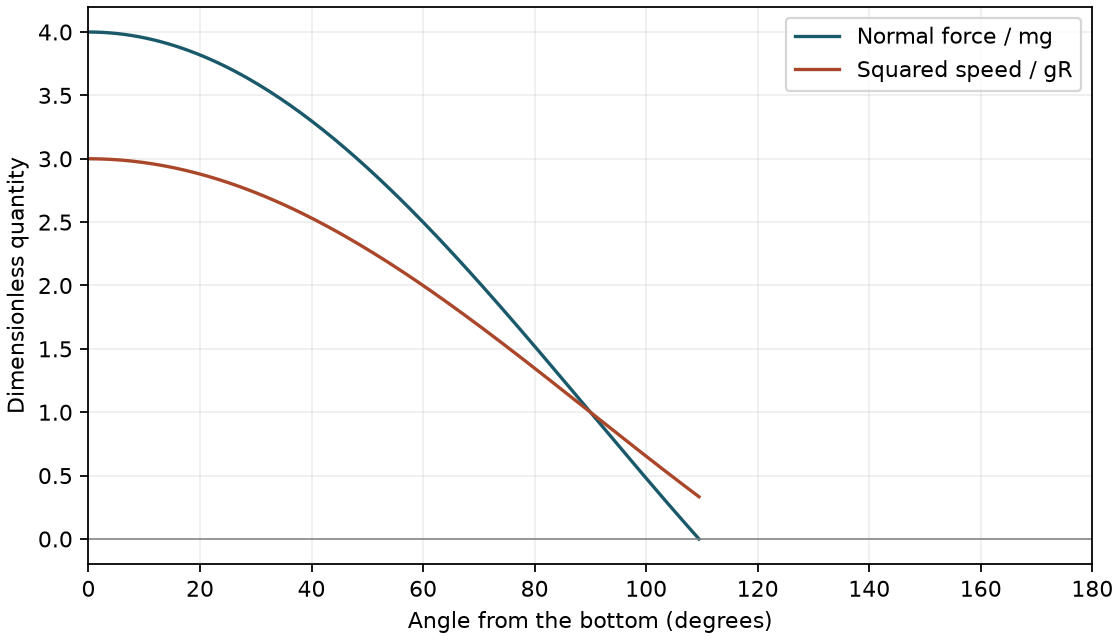
When does a smooth circular guide lose contact?
A bead moves inside a vertical circular guide after receiving a known speed at the bottom. Predict whether it turns around, separates from the guide or completes the circle. A normal-force measurement can distinguish these outcomes before a simple top-height energy test can.
Open editable notebook · Download .ipynb · Mechanics in the laboratory
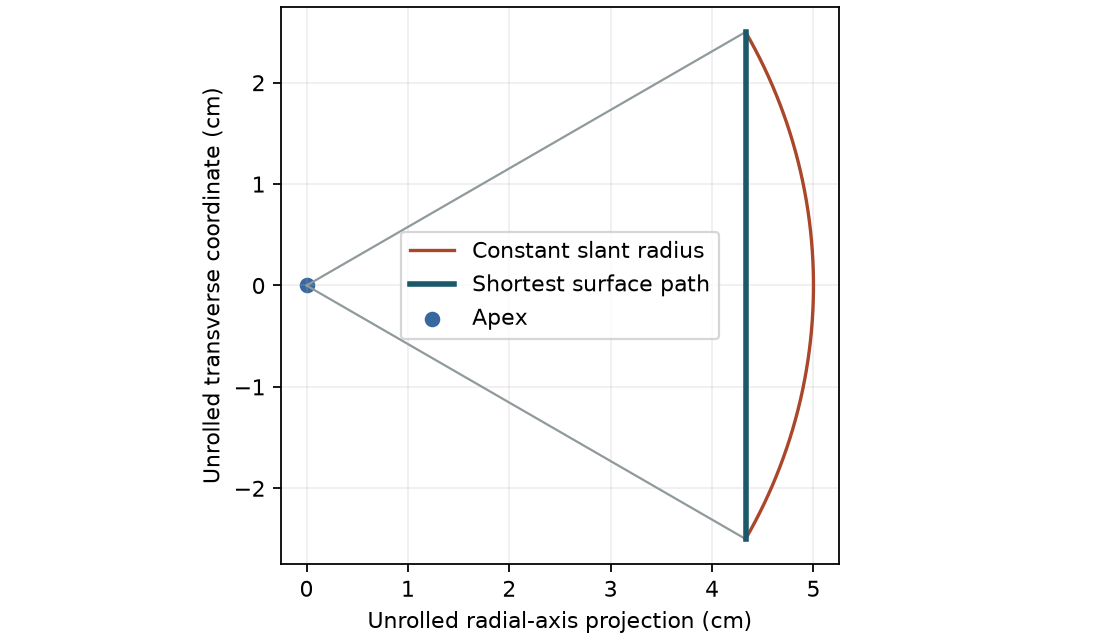
Which path is shortest across the surface of a cone?
A point can move along a conical surface while its azimuth and height both change. Unroll the geometry and predict the shortest path between two marked points. The measurable minimum radius distinguishes the geodesic from a line drawn along a horizontal circle.
Open editable notebook · Download .ipynb · Analytical mechanics from constraints to invariants
Fundamentals / Physics / Classical mechanics
Classical mechanics · Computational notebooks
Change an input, run the Python cells and compare the result with the derivation. You can also download each notebook for Jupyter.